

Aspergillus nidulans
Role of PaxB in Septum Formation

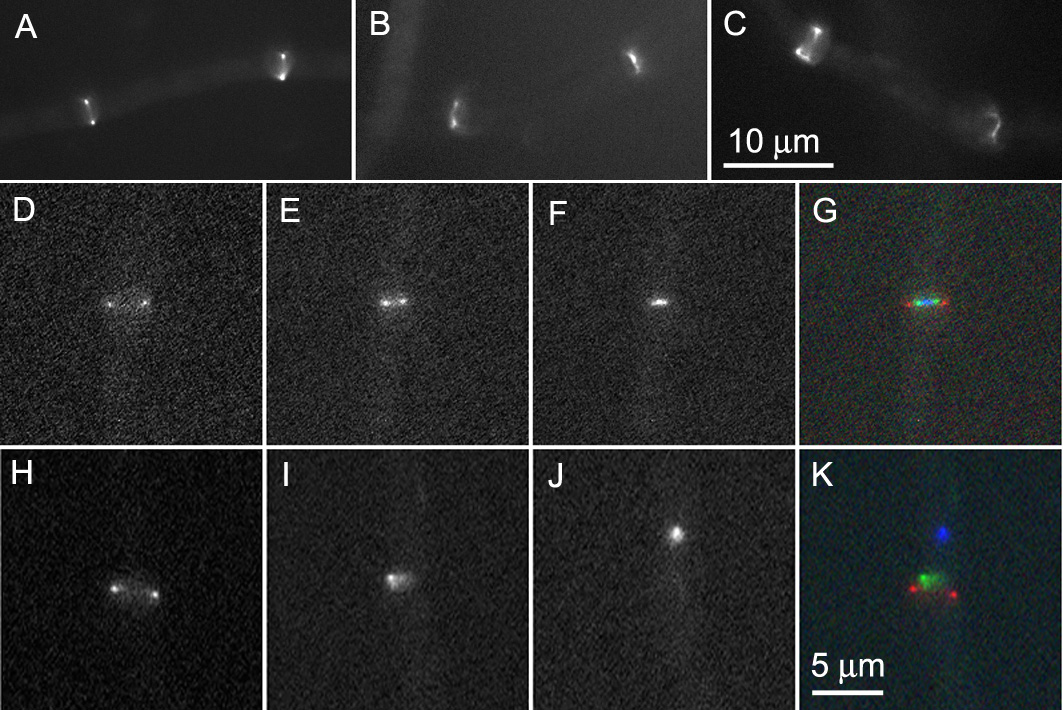
One of the classic septation-deficient mutations in Aspergillus nidulans is the temperature-sensitive sepD5 mutation, whose gene locus, despite the mutation's having been discovered as long ago as 1975, had not (until now) been identified.   Through Next-Generation whole-genome sequencing, we have demonstrated that the sepD5 mutation lies in the A. nidulans orthologue encoding the paxillin-related protein PaxB.   By tagging PaxB with GFP or tdTomato fluorescent tags, we demonstrated that the protein localizes to the cell-apex structure known as the Spitzenkörper and that it colocalizes with components of the contractile actomyosin ring during cytokinesis.   By deleting the gene encoding PaxB, we also show that PaxB is necessary for recruitment of several key proteins to the site of cell division.

The top image depicts the domain structure of A. nidulans PaxB, where IDR indicates the Intrinsically Disordered Region, and Q31R designates the predicted amino acid substitution in the sepD5 mutation.   Three LIM domains are shown at the C-terminus.

The lower figure demonstrates PaxB localization to the Spitzenkörper (left-hand panels) and to the contractile actomyosin ring.

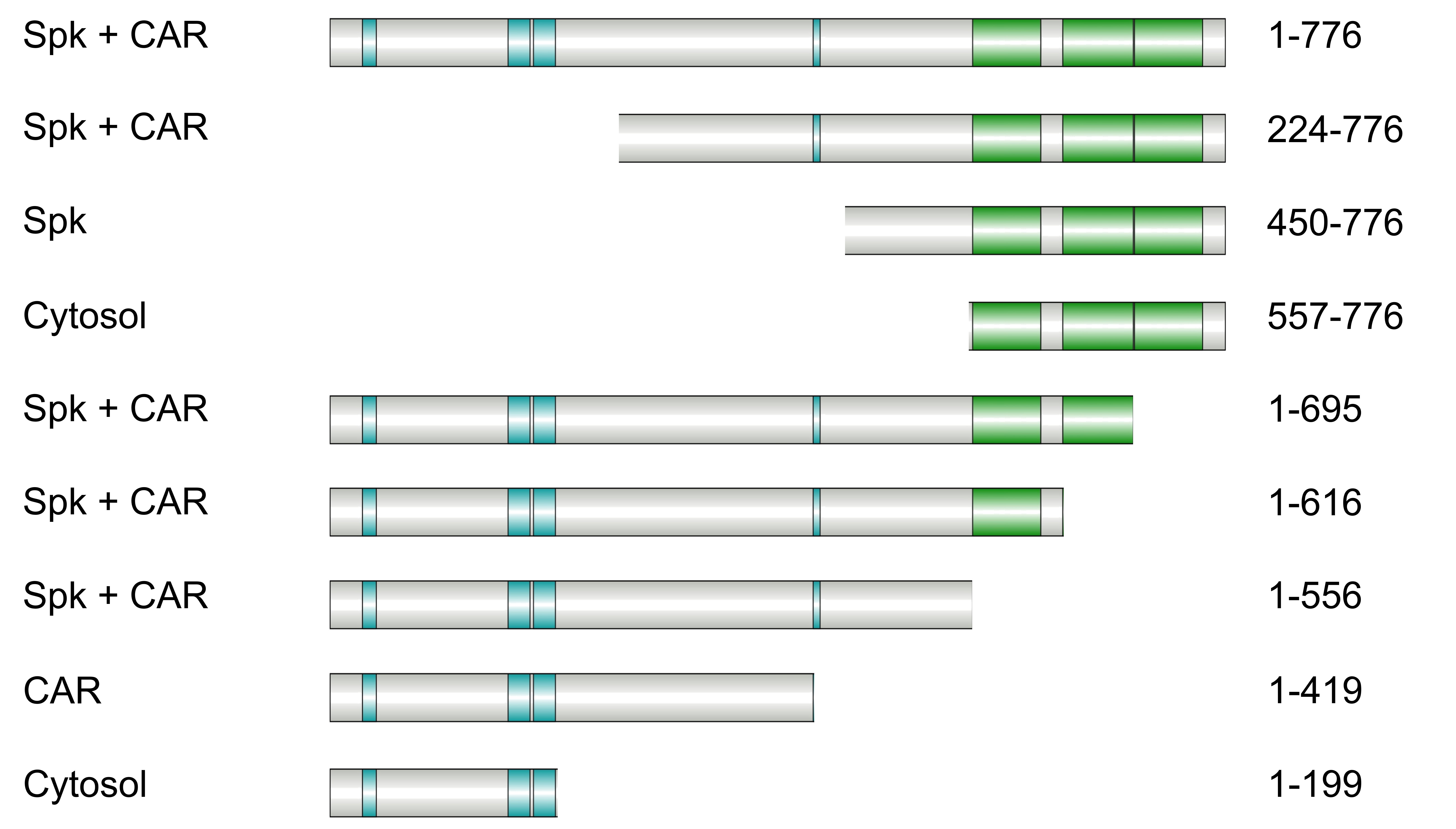
Among several other things demonstrated regarding PaxB is the localization of CAR and Spk targeting determinants to sequences found in the region of intrinsic disorder.  Below is a diagram showing full-length and truncated constructs of the protein, with their localization patterns listed in the left-hand column.
Literature:

Hill, T. W., C. W. Page, M. H. Williamson, and L. Jackson-Hayes.  2026.   "The sepD5 mutation of Aspergillus nidulans localizes to a gene encoding a LIM domain protein required for contractile ring constriction and recruitment of key septation proteins"   Fungal Genetics & Biology 285: 104093

Return to Lab Home Page

Link to Hill Homepage

Link to Jackson-Hayes Homepage